Installation
《面試》
Interview![]() Dimensions Variable
Dimensions Variable
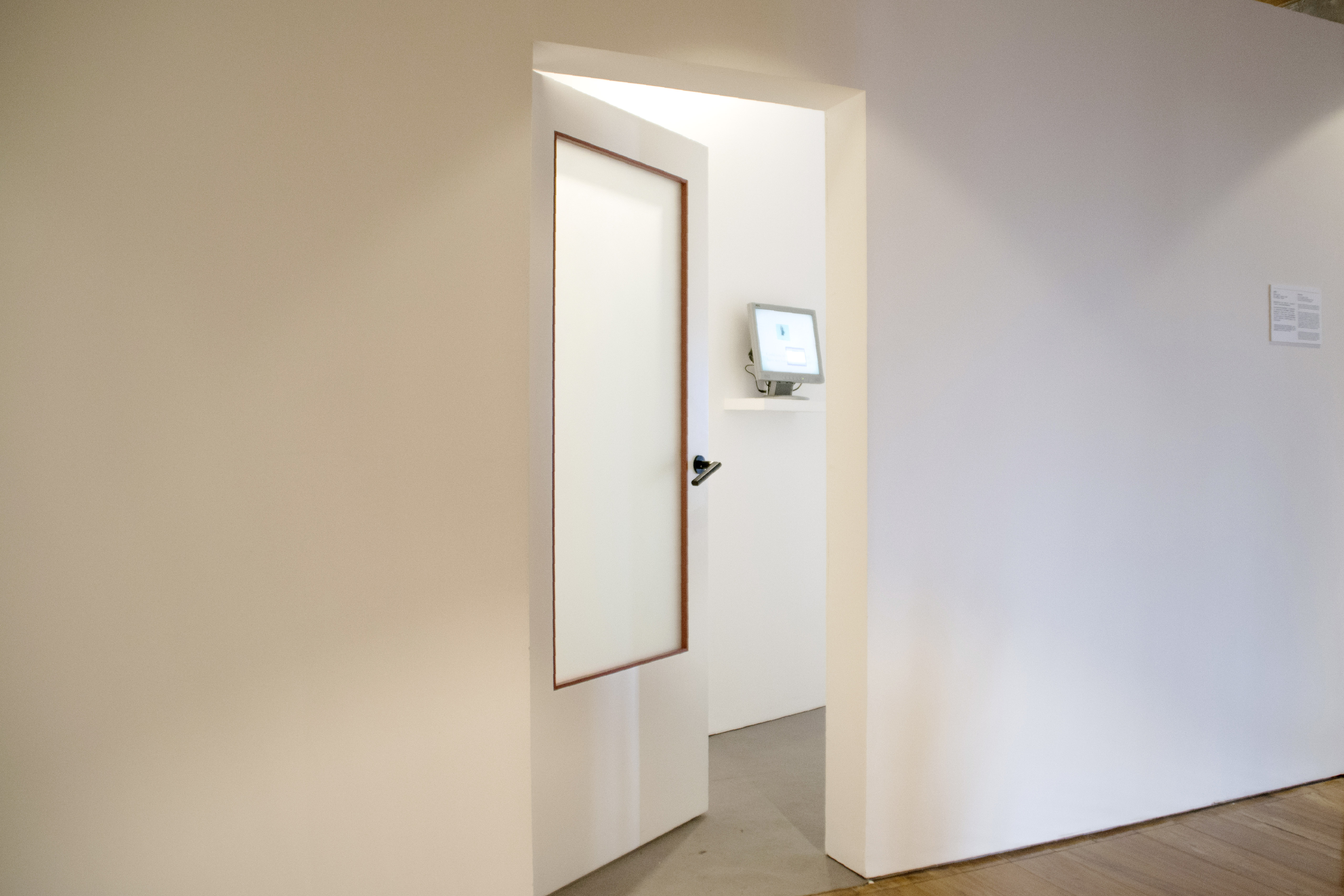
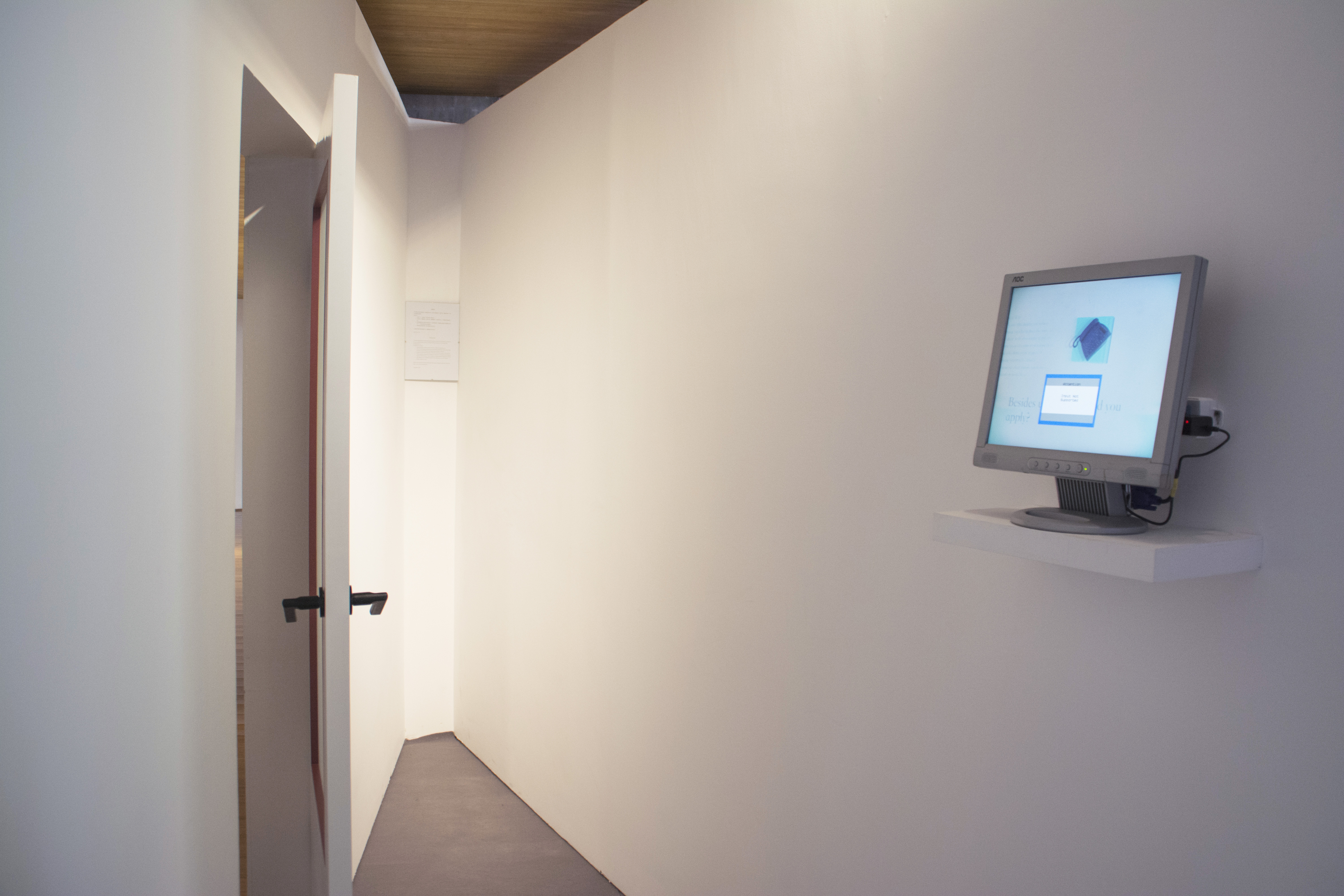
Gypsum walls, Wooden door with frosted glass, Artificial fiber felt, Digital printed with glass frame, 21-inch LED screen
2017
Gypsum walls, Wooden door with frosted glass, Artificial fiber felt, Digital printed with glass frame, 21-inch LED screen
2017
Exhibition: LIGHT UP Therapy Resort, Swatch Art Peach Hotel, Shanghai.
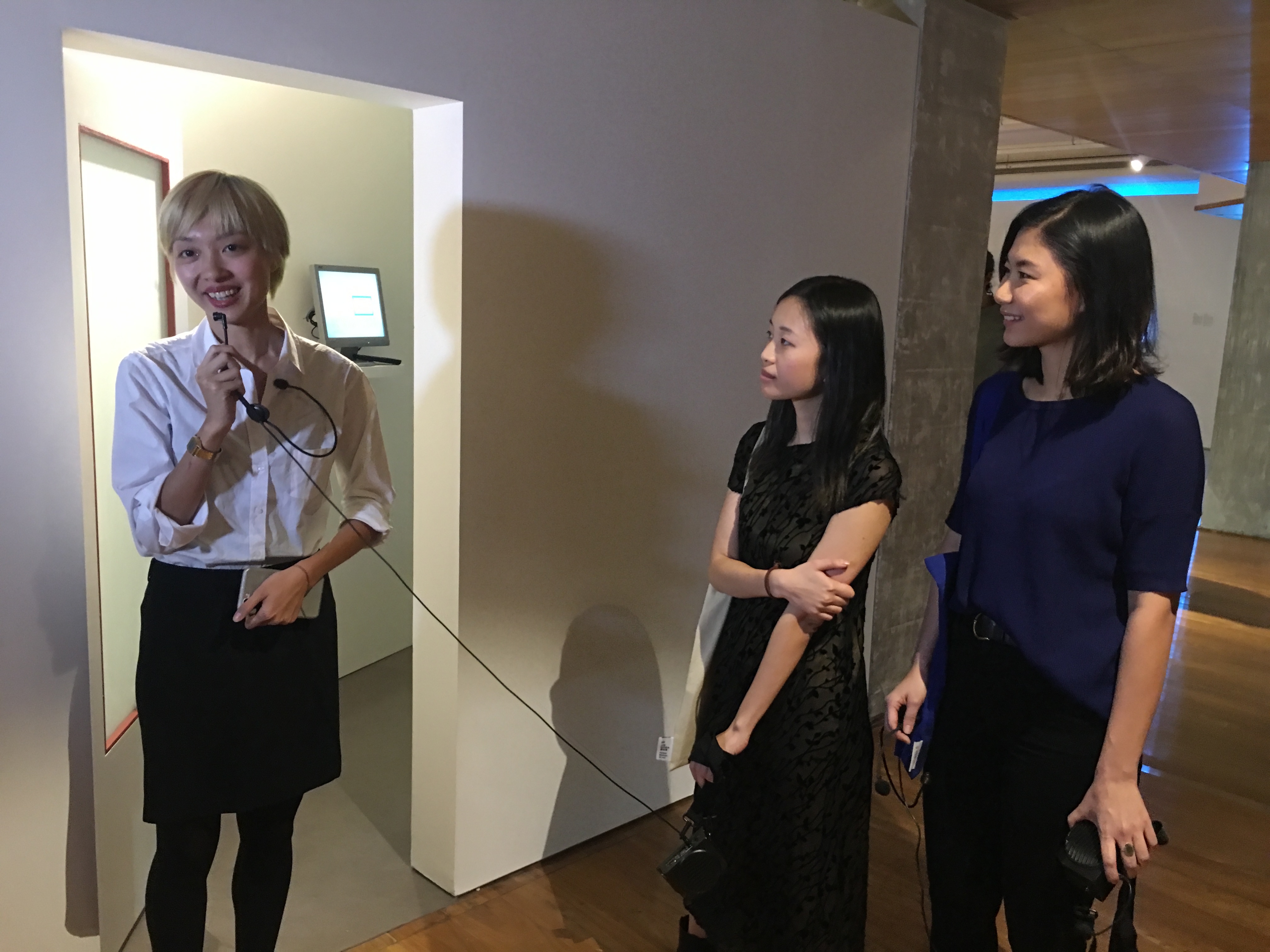
《面試》 是一件裝置及參與式行為作品,借用辦公室面試的場景,思考徵婚與職場招聘之間的相似性。作品以石膏牆、磨砂玻璃木門、人造纖維地毯、數碼印刷與小型 LED 螢幕組成,建構出一個介乎辦公室、婚姻介紹所與私人諮詢室之間的過渡空間。
婚姻常被視為終身大事,但它同時也可以像一種例行公事般被處理。在作品中,觀眾被邀請打開一道門,進入一場為尋找「完美伴侶」而設的模擬面試。展覽開幕當晚,藝術家扮作白領女性,引導觀眾走過這道門,將尋找親密關係的過程轉化為一套行政程序。
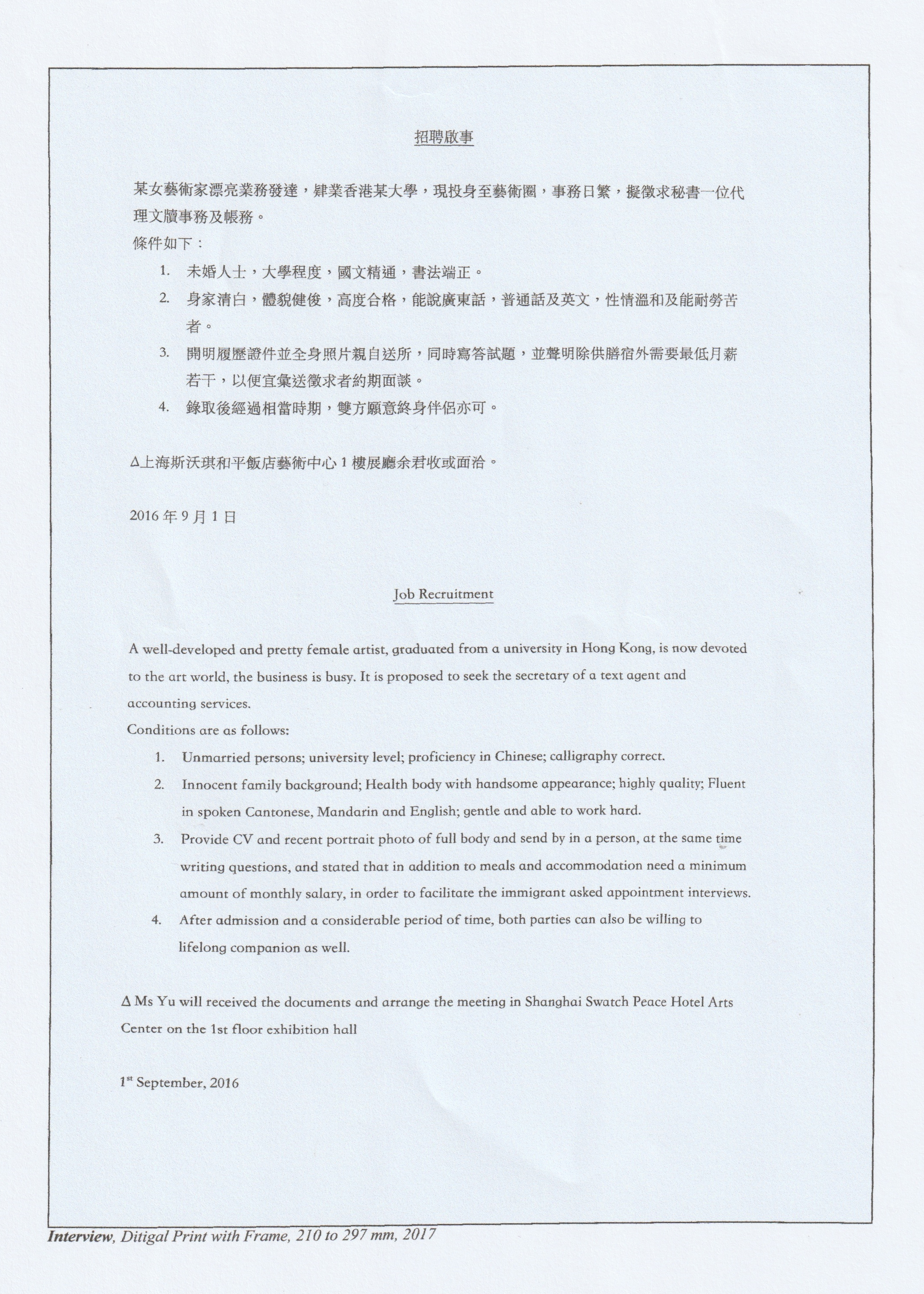
作品關注徵婚廣告與婚姻媒合平台如何要求個體製作一份類似「婚姻履歷」的自我介紹。照片、學歷、工作經驗、身高體重、家庭背景、宗教信仰等個人資料被排列成可供評估的條件。徵婚者如同求職者,需要將自己提交給篩選、比較與面試。當履歷通過初步審查後,下一步往往不只是兩個人的見面,而是雙方家庭也一同進入評量與協商。
透過將婚姻語言放入職場面試的結構之中,《面試》 揭示私人情感如何被公共價值系統塑造。作品追問:愛情、家庭期待、階級想像、性別政治與社會認可,如何透過表格、房間、個人檔案與面試程序被協商?看似私密的尋愛過程,最終變成一種公共敘事:自我被包裝、評估,並被訓練成一個「合適」的人。
Interview is an installation and participatory performance that borrows the setting of an office interview to examine the similarities between marriage-seeking and job recruitment. Built with gypsum walls, a wooden door with frosted glass, artificial fiber felt, digital prints, and a small LED screen, the work creates a transitional space between an office, a matchmaking agency, and a private consultation room.
Marriage is often described as a major life event, yet it can also operate as a business-like routine. In the work, audiences are invited to open the door and enter a mock interview designed to prepare them to find their “perfect partner”. During the exhibition opening, the artist dressed as an office lady and guided visitors through the door, turning the search for intimacy into an administrative procedure.
The work considers how marriage-seeking advertisements and matchmaking platforms ask individuals to construct a form of “marriage CV”. Photographs, education, work experience, height, weight, family background, religion, and other personal information are arranged as qualifications to be assessed. Like job applicants, marriage-seekers submit themselves to selection, comparison, and interview. If the profile passes the first stage of screening, the next step often involves not only the two individuals, but also their families, who evaluate each other’s conditions before the relationship can move forward.
By placing the language of marriage inside the structure of a workplace interview, Interview reveals how private desire is shaped by public systems of value. The work asks how love, family expectation, class aspiration, gender politics, and social recognition are negotiated through forms, rooms, profiles, and interviews. What appears to be a search for intimacy becomes a public narrative, where the self is packaged, evaluated, and made suitable for acceptance.
婚姻常被視為終身大事,但它同時也可以像一種例行公事般被處理。在作品中,觀眾被邀請打開一道門,進入一場為尋找「完美伴侶」而設的模擬面試。展覽開幕當晚,藝術家扮作白領女性,引導觀眾走過這道門,將尋找親密關係的過程轉化為一套行政程序。
作品關注徵婚廣告與婚姻媒合平台如何要求個體製作一份類似「婚姻履歷」的自我介紹。照片、學歷、工作經驗、身高體重、家庭背景、宗教信仰等個人資料被排列成可供評估的條件。徵婚者如同求職者,需要將自己提交給篩選、比較與面試。當履歷通過初步審查後,下一步往往不只是兩個人的見面,而是雙方家庭也一同進入評量與協商。
透過將婚姻語言放入職場面試的結構之中,《面試》 揭示私人情感如何被公共價值系統塑造。作品追問:愛情、家庭期待、階級想像、性別政治與社會認可,如何透過表格、房間、個人檔案與面試程序被協商?看似私密的尋愛過程,最終變成一種公共敘事:自我被包裝、評估,並被訓練成一個「合適」的人。
Interview is an installation and participatory performance that borrows the setting of an office interview to examine the similarities between marriage-seeking and job recruitment. Built with gypsum walls, a wooden door with frosted glass, artificial fiber felt, digital prints, and a small LED screen, the work creates a transitional space between an office, a matchmaking agency, and a private consultation room.
Marriage is often described as a major life event, yet it can also operate as a business-like routine. In the work, audiences are invited to open the door and enter a mock interview designed to prepare them to find their “perfect partner”. During the exhibition opening, the artist dressed as an office lady and guided visitors through the door, turning the search for intimacy into an administrative procedure.
The work considers how marriage-seeking advertisements and matchmaking platforms ask individuals to construct a form of “marriage CV”. Photographs, education, work experience, height, weight, family background, religion, and other personal information are arranged as qualifications to be assessed. Like job applicants, marriage-seekers submit themselves to selection, comparison, and interview. If the profile passes the first stage of screening, the next step often involves not only the two individuals, but also their families, who evaluate each other’s conditions before the relationship can move forward.
By placing the language of marriage inside the structure of a workplace interview, Interview reveals how private desire is shaped by public systems of value. The work asks how love, family expectation, class aspiration, gender politics, and social recognition are negotiated through forms, rooms, profiles, and interviews. What appears to be a search for intimacy becomes a public narrative, where the self is packaged, evaluated, and made suitable for acceptance.
Close-up of “Interview” artwork
1 張伯存,〈徵婚廣告:由私人話語到公共敘事〉,《當代作家評論》,第 4 期( 2004 年 4月),頁 149。
2 費孝通,《生育制度》,岅入《費孝通文集》,第 4㼜(北京:群言出版社,1999 年 10 月),頁30。
3 Andrea Bradley, “Wanted Advertising in British Literature, 1700‐1830.”
1 張伯存,〈徵婚廣告:由私人話語到公共敘事〉,《當代作家評論》,第 4 期( 2004 年 4月),頁 149。
2 費孝通,《生育制度》,岅入《費孝通文集》,第 4㼜(北京:群言出版社,1999 年 10 月),頁30。
3 Andrea Bradley, “Wanted Advertising in British Literature, 1700‐1830.”